Every payslip in Kenya now carries a quiet reminder of this policy: 1.5% off the top for the employee, another 1.5% matched by the employer, all funneled into the Affordable Housing Levy. It's been a mandatory deduction since March 2024, and love it or resent it, it's now a permanent fixture of how Kenyans get paid.
Here's the part that hasn't gotten as much attention as the deduction itself: even with near-universal compliance, the levy isn't raising enough money to do what it was designed to do.
The Numbers, Plainly
The levy brings in roughly KSh 6 billion every month. Housing Principal Secretary Charles Hinga said as much publicly in early September 2026, and he wasn't spinning it as good news — he was flagging it as a problem. The government's stated target is to build 200,000 homes a year under the Affordable Housing Programme. Six billion shillings a month, even stacked up over twelve months, simply doesn't stretch that far once you account for land, materials, labour, and the cost of building at scale across all 47 counties.
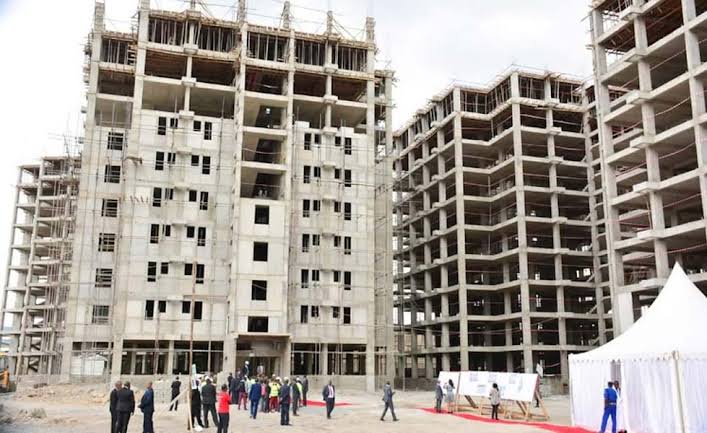
To put the programme's actual reach in context: as of early 2026, it had surpassed 1.1 million registered users and had more than 262,913 units under development across 111 constituencies. That's genuinely one of the largest public housing efforts on the continent — but it also illustrates the gap between ambition and available cash. Building at that scale, year after year, needs more than payroll deductions can realistically provide.
Why This Levy Exists at All
If you're newer to this, a quick recap: the Affordable Housing Levy funds a national programme meant to address Kenya's housing deficit, which some estimates put at over 2 million units and growing. The levy survived a rocky legal history — a High Court ruling briefly declared it unconstitutional, that decision was stayed on appeal, and the matter was ultimately settled by the Supreme Court, which upheld it in December 2023. The government then re-anchored it through the standalone Affordable Housing Act of 2024, which came into force that March and made the levy a permanent feature rather than a temporary emergency measure. It hasn't faced a serious legal challenge since.
What Contributors Actually Get Out of It
This isn't purely a tax that disappears into a black hole — contributors get real, tangible access in return, at least on paper:
- Priority access to units built under the programme, typically priced well below market rate.
- Entry-level pricing that starts remarkably low — as little as KSh 640,000 for social housing units in some county towns, with one-bedroom units in the wider programme starting from roughly KES 1 million.
- Preferential home loans, with levy contributors able to access financing of up to KSh 5 million through KMRC-participating banks at single-digit interest rates — a genuinely different proposition from the 12%+ rates in the open mortgage market.
- Mortgage tax relief, which the 2025 Finance Act extended beyond people buying completed homes to include Kenyans building through SACCOs or personal loans.
For a young professional priced out of Nairobi's mainstream property market, that combination — subsidised unit pricing plus below-market financing — is genuinely attractive, assuming a unit becomes available to them in a reasonable timeframe.
The "Assuming" Is Doing a Lot of Work
And that's really the crux of the current story. The programme has real scale, real unit counts, and a genuinely large registered user base. But the PS himself is now on record saying the levy's own collections can't sustain the pace the government has promised. That opens up a few paths from here, none of which are fully resolved yet:
- Increase the levy rate — politically difficult, given how recent and contested the levy already was.
- Bring in additional financing — blended funding from development partners, bonds, or private capital layered on top of levy collections.
- Slow the annual build target — quietly deliver fewer than 200,000 units a year while keeping the programme running.
- Prioritise ruthlessly — build fewer, larger projects in fewer locations rather than spreading thin across all 111 constituencies simultaneously.
None of these is a bad-faith outcome necessarily, but they're different enough that anyone counting on a unit under this programme should be paying attention to which direction things move.
What This Means If You're a Levy Contributor Right Now
If you're already contributing — and if you're employed in Kenya, you almost certainly are — a few practical takeaways:
- Register formally with the programme if home ownership through it is part of your plan; being a payroll contributor alone doesn't automatically put you in the applicant pool.
- Check the county-specific project pipeline near you rather than assuming national announcements translate into local availability soon.
- Understand the KMRC financing route even if you end up buying outside the programme — the single-digit lending tied to levy contributions can sometimes apply more broadly than people assume.
- Don't treat "registered" as "guaranteed." With demand this large relative to units delivered, allocation and waiting periods are real constraints.
- Watch the funding conversation. If the government moves toward alternative financing or bond issuance for the programme, that's a signal the pace of delivery could pick up — or that terms for future contributors could shift.
The Honest Take
The Affordable Housing Levy has done something genuinely hard: it has raised sustained, predictable revenue and delivered a real, verifiable pipeline of units at a national scale most housing programmes never reach. But the government's own housing PS is telling the public, plainly, that the money coming in doesn't match the ambition going out. That's not a reason to write the programme off — but it is a reason to treat "200,000 homes a year" as a target under active strain rather than a settled fact.
Frequently Asked Questions
How much does Kenya's Affordable Housing Levy collect per month? Roughly KSh 6 billion a month, according to Housing Principal Secretary Charles Hinga, speaking in early September 2026.
Is the levy enough to fund Kenya's 200,000-homes-a-year target? No. The Housing PS has publicly stated that the levy's total collections cannot sustain that target on their own.
How much is the Affordable Housing Levy and who pays it? It's 1.5% of gross monthly salary from the employee, matched by 1.5% from the employer, for a combined 3% per employee per month. Other individuals earning income in Kenya are also required to remit 1.5% of their gross income.
Is the Affordable Housing Levy legal? Yes. After a High Court ruling briefly declared it unconstitutional, the Supreme Court upheld the levy in December 2023, and it was subsequently made permanent under the Affordable Housing Act, 2024.
What do I get for paying into the levy? Priority access to below-market-rate housing units, potential access to home loans of up to KSh 5 million at single-digit rates through KMRC-participating banks, and mortgage tax relief extended under the 2025 Finance Act.
How many housing units are currently under development in Kenya? As of early 2026, more than 262,913 units were under development across 111 constituencies in all 47 counties, with over 1.1 million people registered on the programme.